 Back to all news
In today’s digital economy, checkout experience is just as important as price or product quality. Consumers expect payments to be instant, intuitive, and secure-especially on mobile devices.
This expectation has accelerated the rise of one-click payment solutions, which reduce friction and help merchants increase conversions while maintaining high security standards.
But not all “one-click” payments work the same way.
In this article, we explore the evolving ecosystem of one-click solutions, from global wallet giants like Apple Pay and Google Pay to scheme-based standards like Click to Pay and regional leaders
What are one-click payments?
One-click payments allow customers to complete purchases with minimal interaction, typically a single tap or click after an initial setup. Payment credentials are securely stored, eliminating the need to repeatedly enter card numbers, expiry dates, or authentication details.
In contrast to traditional online checkout, where customers must go through several fields and often retype the same information each time, one-click methods streamline repeat purchases by securely saving payment details in advance. Once a shopper has enrolled, future transactions can be confirmed in moments with far fewer steps.
Digital wallet leaders
Apple Pay
Apple Pay enables fast, secure payments with biometric authentication (Face ID / Touch ID) for online and in-app purchases.
For e-commerce, it stands out because it supports both:
- Mobile checkout, where customers confirm instantly on their iPhone or iPad, and
- Desktop checkout, where shoppers can complete payment by confirming on their iPhone, for example by scanning a QR code displayed on the screen (depending on browser and integration).
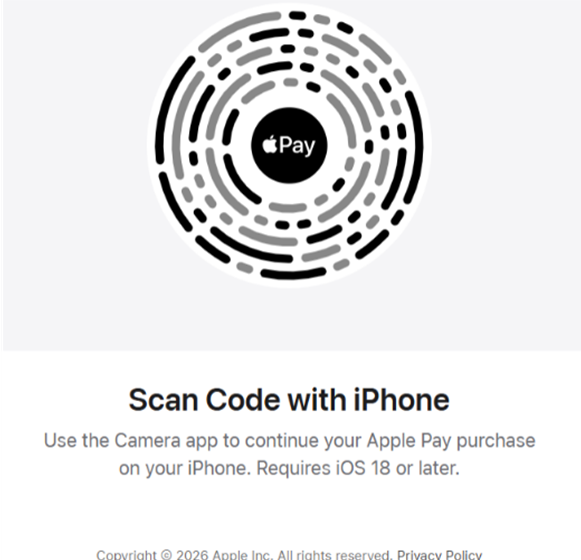
Picture: Apple Pay on Desktop
In terms of scale, Apple Pay remains one of the most widely adopted digital wallets globally, with estimates of ~650 million active users (2025) and over $8.7 trillion in transaction volume.
Apple Pay’s key advantage is how frictionless it feels inside the Apple ecosystem: checkout is fast, familiar, and protected by device-level security and biometrics.
Google Pay
Google Pay offers a similarly streamlined experience, particularly across Android devices and Chrome browsers.
Key figures include:
- ~520 million users globally (2025)
- Strong merchant acceptance across major markets
Google Pay’s cross-platform flexibility makes it particularly strong in Android-dominant markets.
Global one-click standards
Click to Pay: A universal card-based experience
Click to Pay is an industry standard supported by Visa and Mastercard. It makes online card payments faster and easier by securely recognizing returning customers and their saved cards. Shoppers can complete their purchase in just a few clicks, without manually entering card details each time, while still benefiting from strong security and authentication.
How it works
- Customers create a Click to Pay profile and store their card credentials.
- At checkout, they select the Click to Pay button.
- Tokenisation replaces sensitive card data with a secure token, reducing fraud risk.
Tokenisation enhances security by ensuring that actual card numbers are never shared with the merchant.
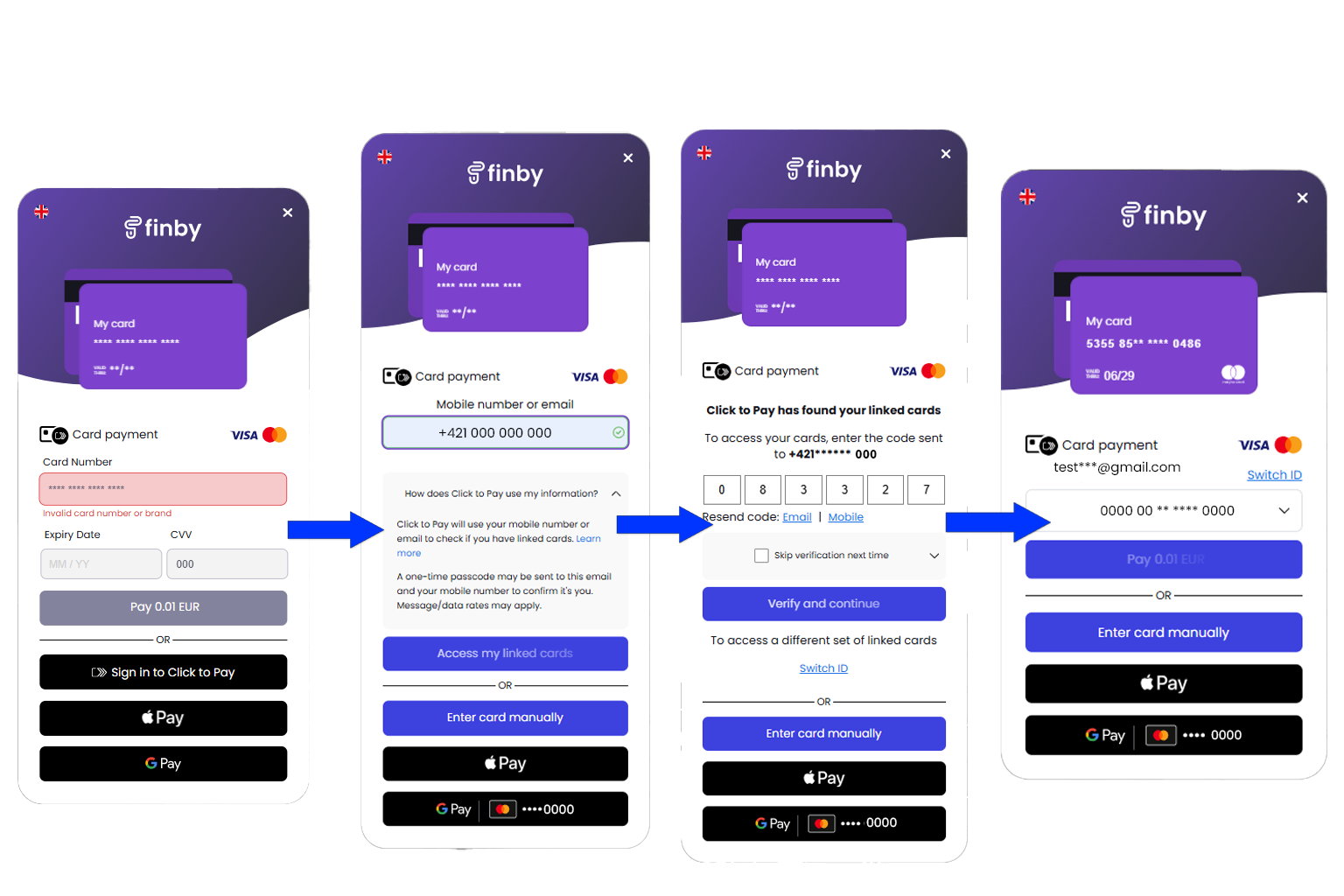
Picture: Click to Pay flow
Key benefits for merchants
- Reduces friction at checkout
- Can improve approval rates through network tokenisation
- Works across browsers and devices
- Doesn’t depend on a single wallet or ecosystem
Click to Pay is a strong option for merchants who want a universal, card-based one-click experience without tying customers to proprietary wallet solutions.
Regional Innovation
BLIK One Click (Poland)
BLIK OneClick eliminates the need to enter a BLIK code for repeat purchases. Once a customer approves a merchant in their banking app, future transactions can be completed instantly without code input.
This creates a highly frictionless experience while maintaining bank-level authentication.
BLIK demonstrates how local payment ecosystems can successfully compete with global wallets by focusing on speed and trust.
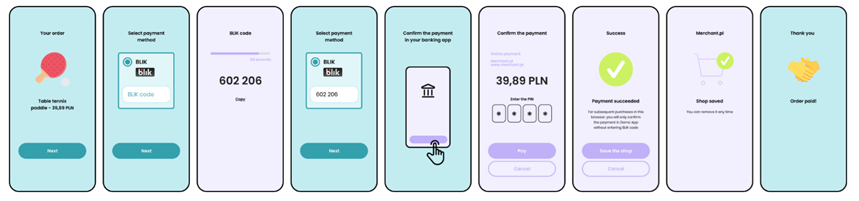
Picture: An example of the process of saving the Shop with an invitation displayed after a successful payment (source: Blik)

Picture: Example of BLIK payment process without code (Source: Blik)
Why One-Click payments matter more than ever
- Digital wallet adoption is surging
Over half of the global population uses a digital wallet in 2025, with projections estimating 6 billion users by 2030.
- Checkout complexity drives abandonment
Complicated forms remain a leading cause of cart abandonment. Faster payment experiences directly support higher conversion rates.
- Security builds trust
Tokenisation and strong customer authentication reduce fraud exposure while preserving convenience.
Important: What “One-Click” really means
It’s worth clarifying that “one-click payment” does not always mean a single click for first-time users.
In most cases, the frictionless experience happens after the initial setup or first transaction, when credentials are securely stored and reused.
This applies across:
- Digital wallets (Apple Pay, Google Pay)
- Scheme-based standards (Click to Pay)
- Bank-linked solutions (BLIK OneClick)
The true value of one-click payments lies in streamlined repeat purchases, improved approval rates, and a faster customer journey, not just the number of taps on the screen.
One-click payments are quickly becoming a standard expectation in online commerce. If you’d like to explore how solutions such as Click to Pay, Apple Pay, Google Pay, or BLIK OneClick can fit into your checkout strategy, our team is ready to help. Get in touch with us to discuss the best setup for your business and how to optimise your payment experience for higher conversions and stronger approval rates.
